Lithography
Approximate period: 1890–1905
(With later developments, it continued to be used throughout the 20th century.)
Lithography is one of the most foundational and defining printing techniques in postcard history. It is often summarized with a single phrase: oil and water repel each other. But that principle becomes truly clear only when you understand how the surface is prepared and how the ink is guided.
Lithography is a planographic process: the printing surface is not carved, engraved, or raised.
Early lithography used smooth limestone; later, metal plates became common. In either case, the surface contains microscopic pores, and that fine structure is at the heart of how lithography works.
What does the “oil and water” principle actually mean?
Lithographic printing ink is oil-based. Water functions as an active control layer that determines where ink can and cannot adhere.
The process works like this:
- The image is drawn using a greasy drawing material.
- Image areas become ink-loving and water-repellent.
- Non-image areas become water-loving.
- The surface is dampened before printing.
- Oil-based ink adheres only to the image.
When paper is pressed onto the surface, only the inked image transfers, and the printed picture is formed.
Because of this principle, lithography typically:
- produces a flat print,
- does not create an embossed or raised feel,
- is well suited to fine linework and detailed drawing-like textures.
Greasy drawing materials used in lithography
Lithographic images are not drawn with ordinary pencils or casual paints. The materials must contain grease so the surface can “remember” the image as an ink-receptive area. The most common greasy drawing materials include:
1) Lithographic crayon
The most classic and widely used tool. It typically contains wax, soap, oils, and carbon pigments.
Different hardness grades allow control of tone and line: softer crayons produce darker, richer marks,
while harder crayons create finer, more controlled lines.
2) Greasy ink / tusche
Used for a freer, more painterly effect. Tusche is a fluid, often near-black substance applied with a brush or reed pen.
It produces soft transitions and wash-like areas.
3) Grease-chalk-like mixtures
In some cases, artists prepared custom mixtures and adjusted the grease content to control tone and texture.
This is more common in fine art prints than in mass postcard production.
How the printing cycle shapes lithography
Because there is no carved relief—everything exists on one plane—the stone or plate is repeatedly dampened, inked, and placed under mechanical pressure.
What happens as more impressions are printed?
As the number of impressions increases, the surface gradually wears: edges can soften, fine lines may lose sharpness, and overall contrast can decrease.
What to look for on a postcard
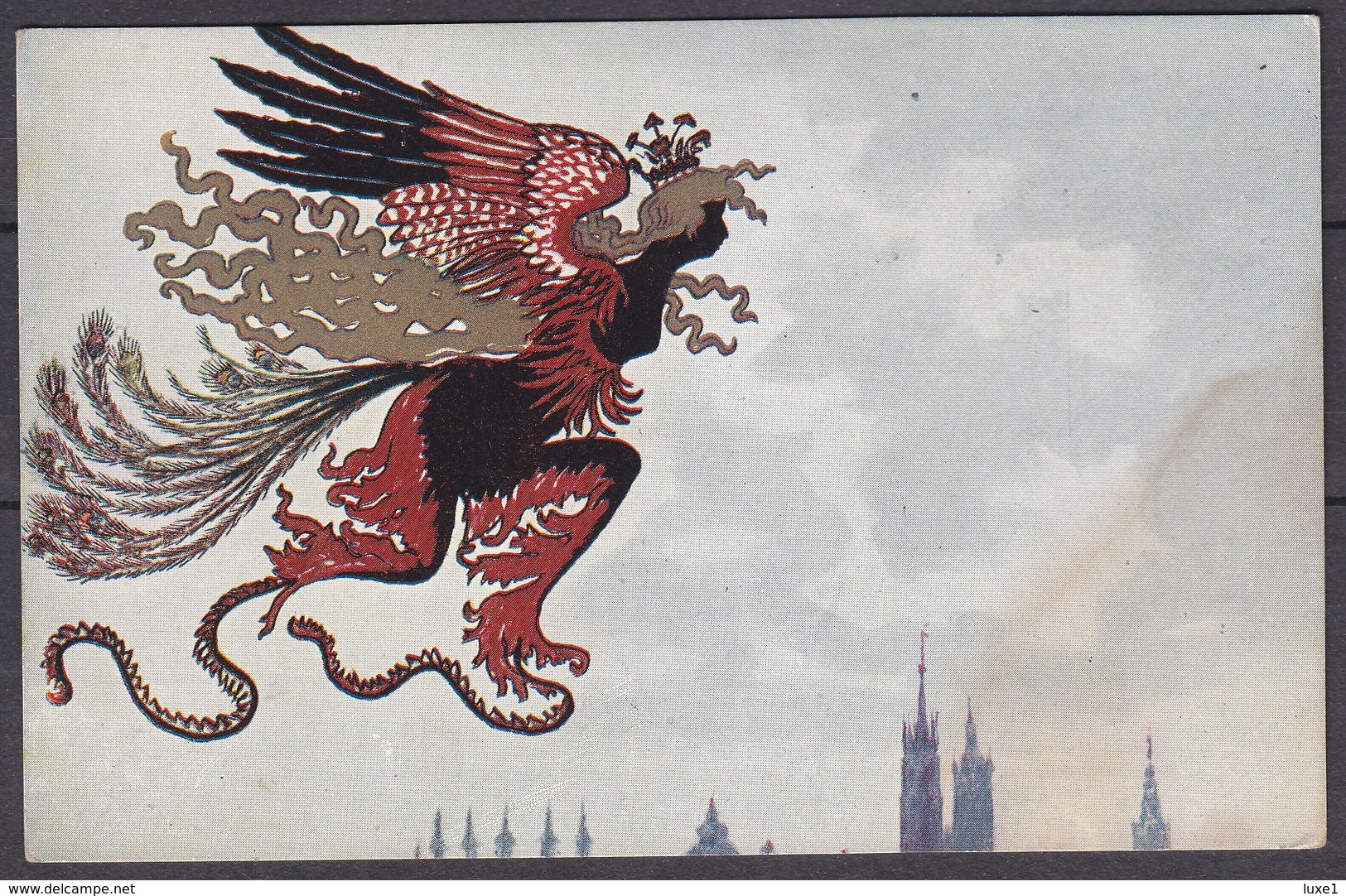
- Flat ink layer: no raised impression typical of letterpress.
- Drawn character: outlines and shading feel illustrated.
- Hatching and line-based shading are common.
- Layered color work may show slight registration shifts.
Why it matters for collectors
Lithography forms a backbone of early postcard production. Early impressions are often cleaner and more contrast-rich, while later impressions may show softening and background toning.
Quick checklist: Flat print • oil-based ink • drawn line character • hatching • strong sharpness in earlier impressions • illustration-like feel